The details below separate what was seen from what still needs to be tested.
The moment that raised the question
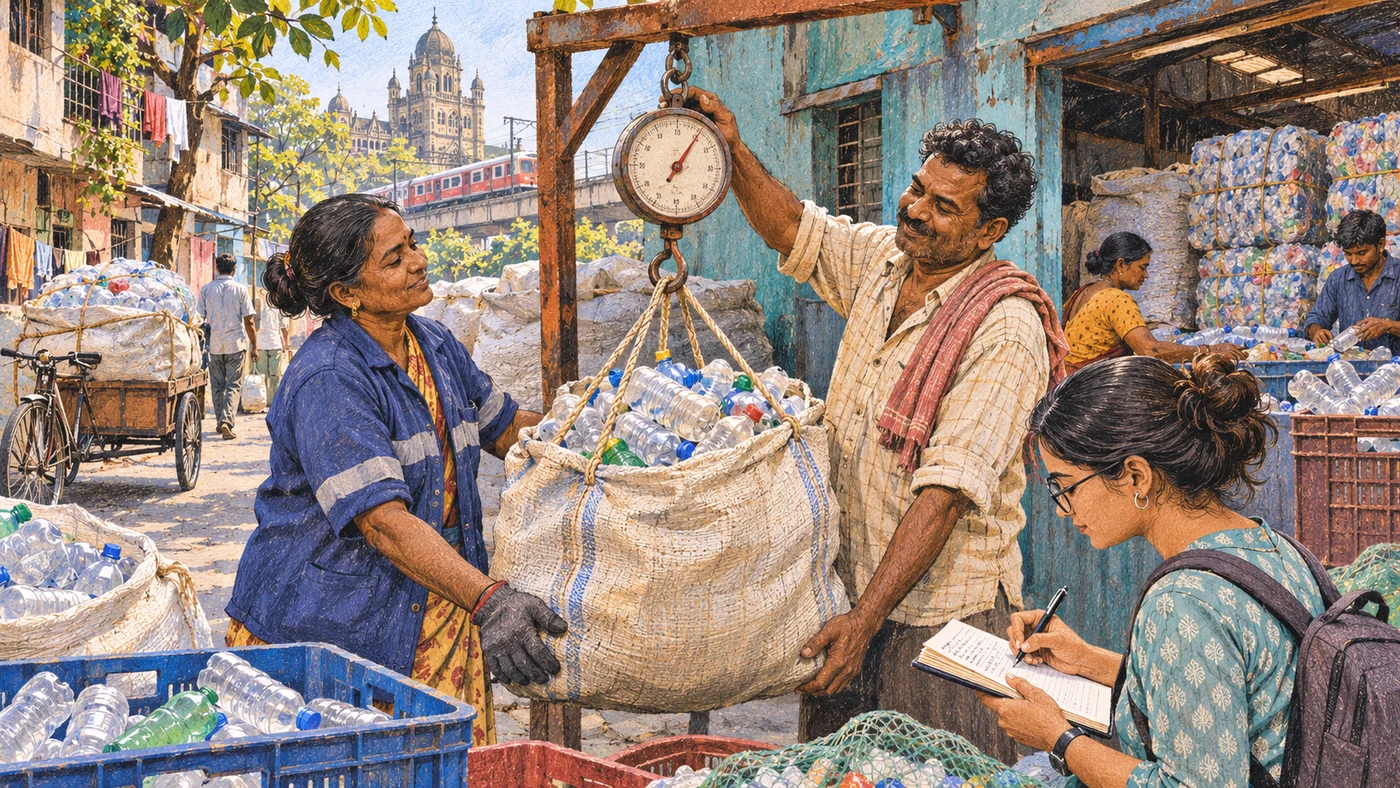
In Kurla West, Mumbai, the founder saw a waste-collection worker separate plastic bottles while collecting garbage. The moment suggested that bottles already have value somewhere in the scrap chain.
That does not mean the bottles are unclaimed or freely available. A waste picker, building worker, scrap dealer or municipal contractor may already depend on that material.
Why this is worth checking
Plastic bottles move through homes, collectors, sorters, dealers and recyclers. Value can disappear through contamination, small quantities, travel and repeated handling.
A new service is only useful if it improves recovery without taking income or access away from people already doing the work.
What we know so far
- One direct founder observation in Kurla West.
- A visible act of separation suggests an existing recovery chain.
- No collected weight, buying price, route cost or unresolved coordination gap has been documented yet.
The unknowns decide everything
- Actual weight available per building
- Dealer buying prices and quality rules
- Existing waste-picker arrangements
- Pickup and sorting cost
- Collection permissions
- Whether coordination improves anybody’s income
A responsible first attempt
- Talk to one building manager, one waste worker and two scrap dealers.
- Map who currently owns or earns from bottles at each step.
- Weigh one week of bottles only with permission.
- Record rejected material, travel time and quoted prices.
- Propose no new collection route until the current chain is understood.
Real-world action
Attempts
Independent tests of “What is one sack of bottles really worth?”, documented without a requirement to succeed.
Loading attempts…
Discussion
Share what you have noticed
Questions, experiences and possible solutions appear publicly. Sources presented as verified research are reviewed separately.
Loading conversation…
Loading public discussion…