
Boring business
A recurring collection day, resident communication and an authorised downstream partner—not informal recycling.
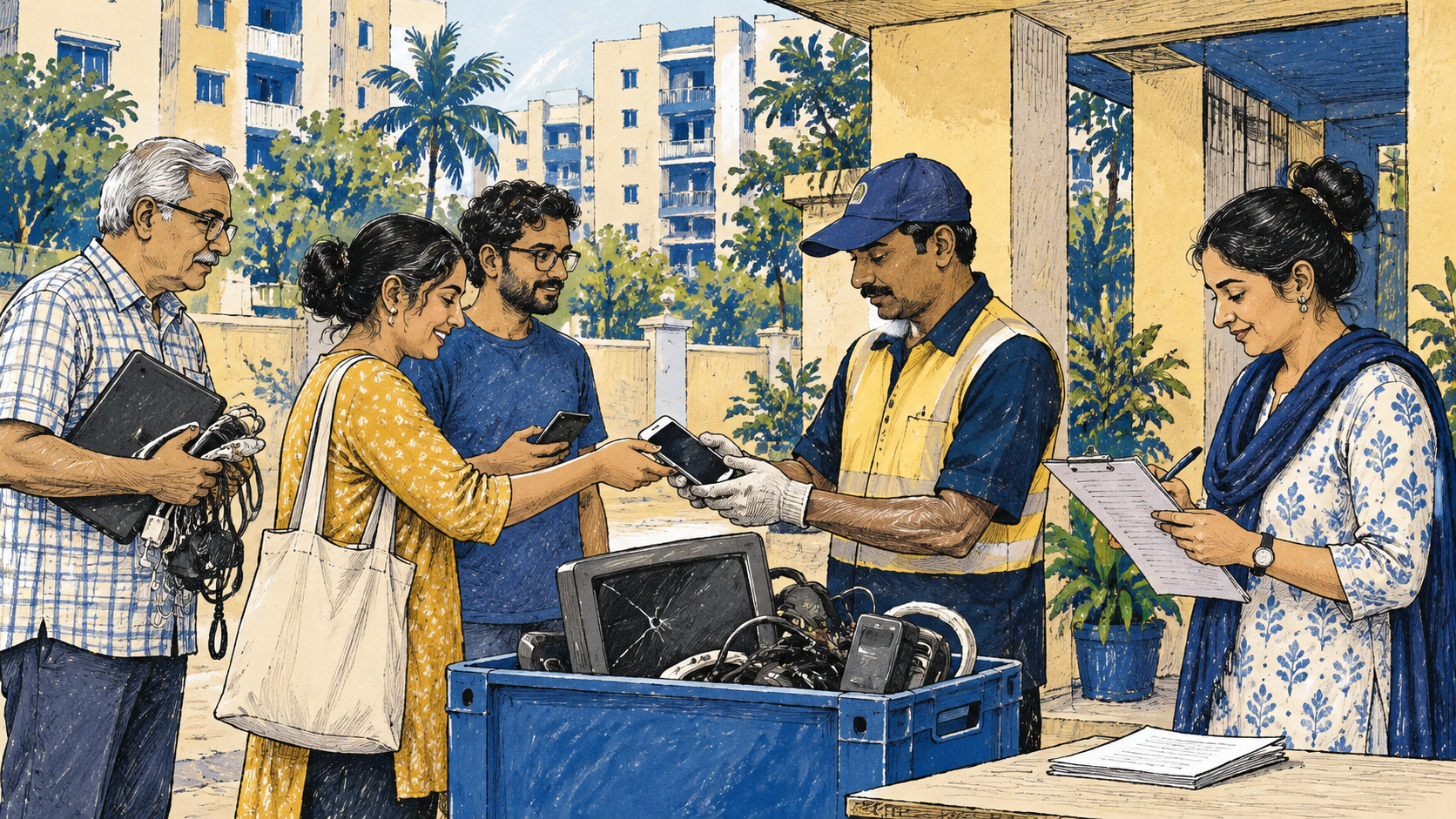
On a Saturday morning, a society manager is answering the same question for the fifth time: “Where do I put this old laptop?” A resident has a microwave in the corridor. Another has a bag of cables.
The useful work is not “being green.” It is making one collection day understandable: tell residents what is accepted, prepare the area, record the handover and coordinate an authorised partner.
The society committee or facility manager is the likely buyer. Residents get a clear exit for unwanted devices; the manager gets one announced day, one collection point and one handover record instead of twenty private arrangements.
What people do now: Residents store items, use informal collectors or search for an authorised recycler.
Residents accumulate small electronics but need a credible handoff point.
Before the event, the coordinator confirms exactly what the authorised partner will accept. On the day, they check registrations, keep devices dry and secure, and record the handover. They do not open devices, buy scrap or promise data destruction they cannot prove.
Imagine 18 residents register, but half bring items the recycler did not approve. The coordinator needs a rejection rule before collection day, not an argument in the lobby. Batteries, loose parts and data-bearing devices may each need a different answer.
What is needed: Phone, sign-up sheet, simple labels and partner-provided collection process.
The boundary: Use an authorised recycler/PRO; do not represent yourself as an e-waste recycler without the required authorisation.
₹15k–₹40k for outreach, labelled collection materials and a partner-led pilot; do not buy e-waste inventory.
The first rupees buy labels, a sign-up form, resident notices and partner checks. They should not buy old electronics. If the partner will not provide a written acceptance process, there is no safe pilot to run.
Cash rule: Keep it near zero: collect only against the recycler’s documented acceptance process.
Start with one society committee or property manager. Offer a short no-obligation walk-through, show the exact resident notice and collection checklist, and ask for a pilot collection day. Repeat with two nearby societies only after the first handover is documented.
Approach society managers, facility managers and resident WhatsApp groups with one scheduled pilot.
Three conversations are not three customers. Ask for a written scope and a payment before describing demand as proven.
Can this coordination earn enough to survive?
Insufficient public local price evidence. Quote a coordination fee only after partner and route quotes.
The fee has to cover several small jobs: persuading a committee, answering resident questions, being present for collection and chasing the handover record. Material value may belong to the recycler. Until one partner quotes terms and one society pays, margin is unknown.
How often might it repeat? Quarterly or event-based; local recurrence needs validation.
Phones, routers, chargers and appliances keep ageing inside occupied buildings. The recurring need is believable. The unanswered question is whether a committee pays for coordination or expects a recycler to arrange everything for free.
Existing choices include Karo Sambhav and Attero. They are alternatives, not proof that a new operator deserves a place.
Secure one current MPCB-listed partner, show one committee the full resident notice, and collect registrations before setting a date. Continue only if the partner accepts the mix and the committee agrees who pays.
Secure one authorised partner, recruit one society and measure registrations, kilograms accepted and manager willingness to repeat.
Will you test this?
It fails if residents do not bring enough material, a partner is unreliable, or the operator starts transporting or handling regulated waste without the right authority.
No documented downstream chain, data-bearing devices without a deletion policy, or paying residents for material before you understand grade and liability.
Boring does not mean profitable. A necessary task can still have low prices, demanding customers and expensive mistakes. If the scope cannot fit on one page, the first version is probably too broad.
Useful local coordination may exist between the cupboard and the authorised recycler. The business is not “collect valuable scrap.” It is a careful, traceable handoff. One documented building is enough for the first decision.
Context-backed; local willingness to pay is unverified.
Each link establishes only the context described below it. Local buying behaviour, cost and profitability are intentionally not guessed from operator websites.
Supports that e-waste has a regulated handling context and authorised facilities; it does not prove local demand or pricing.
Lists authorised operators and validity dates. A coordinator must still verify that a selected authorisation is current.
Example of an existing collection/recycling operator, not an endorsement or a Mumbai price benchmark.
Continue exploring