
AI in Practice
AI can make a first draft of a process document from notes; the person who does the work must validate it.
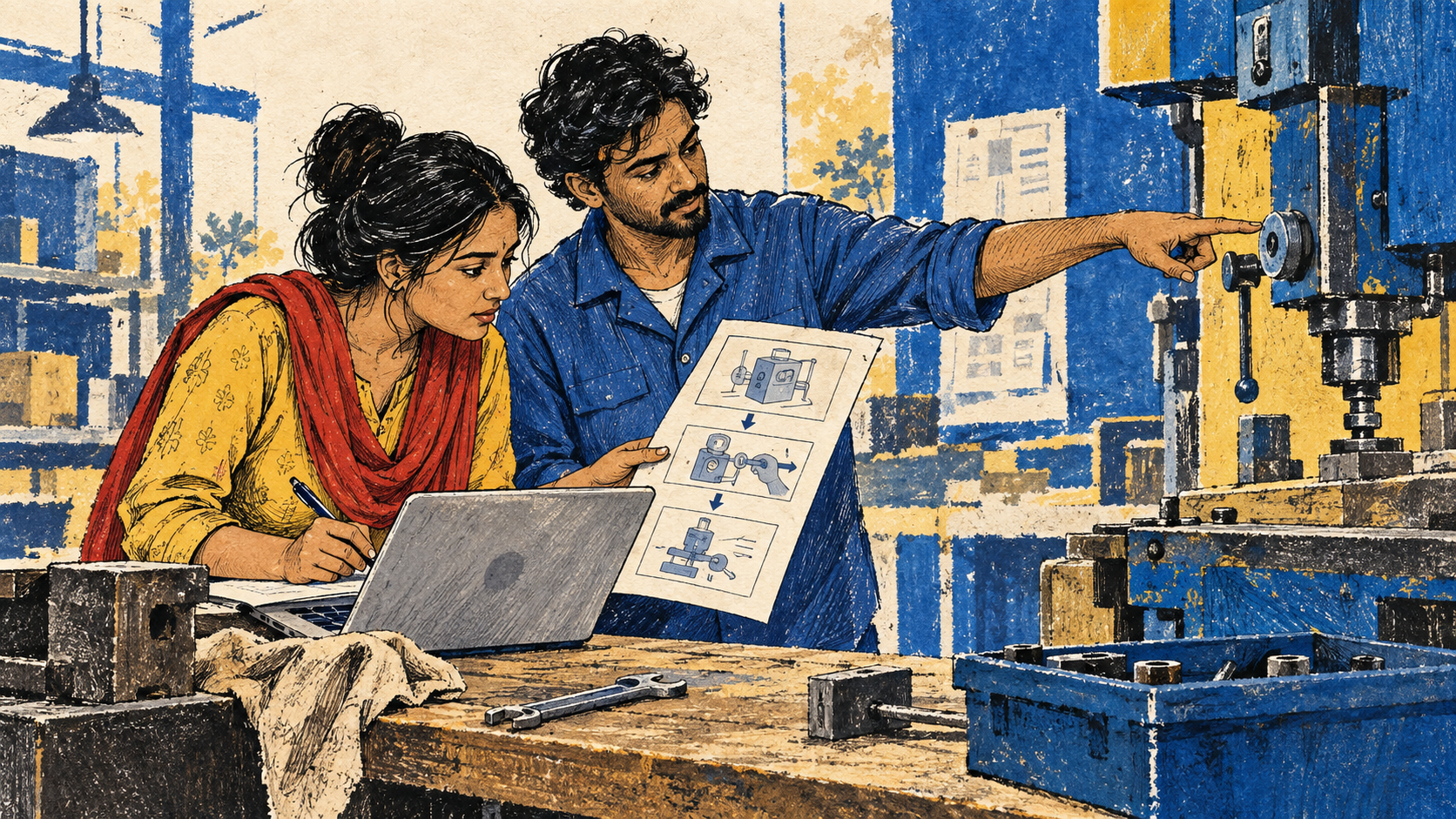
A new team member asks how to do a weekly task. The answer lives in one person’s memory, old messages and a folder of screenshots.
AI can shape approved notes into a first draft. The person who actually does the work must test it; a neat document can still be wrong.
A task lives in an experienced person’s memory, scattered screenshots and old messages.
Write this version down before touching a tool. Otherwise there is nothing fair to compare.
What should the machine prepare—and what must a person still decide?
AI can turn approved notes into ordered steps and list what is missing. It should label a gap as a question, not manufacture a confident instruction.
AI can structure a draft SOP, extract steps from approved notes and turn edge cases into questions for the operator.
AI prepares. A person decides.
Before: a new employee asks five questions while preparing the weekly report. With assistance: approved notes become a draft guide, and a supervised test reveals that two steps assume access the new employee does not have.
The corrected guide is valuable because a person tested it. The first polished draft is only a hypothesis about how the work happens.
This does not remove the person. It removes part of the repetitive preparation and gives that person a smaller set of exceptions to inspect.
Track whether a new team member can complete a safe test task and how many corrections the guide needs.
The outcome is fewer repeated explanations and a guide that a real person has tested.
Measure the work before and after on the same kind of task. Count corrections and serious errors as well as minutes. A faster draft that creates more checking is not an improvement.
Remove credentials and unnecessary customer data from the source material. Safety, legal and financial steps need the right qualified reviewer.
Research indicates adoption is often assistive; documentation is a low-risk entry point only when source material is controlled.
Invented steps, stale procedures, exposing internal documents, and mistaking a polished document for a working process.
Do not use AI if the process is changing daily, involves safety or legal decisions, or the team cannot provide a reliable source to start from.
AI does not fix a broken process. Sometimes it simply makes the broken process faster. If the rules are unclear, fix the rules first.
Document one low-risk weekly task. Have a second person follow it under supervision and record every unclear step.
Choose one low-risk weekly task. Count supervisor interruptions, unclear steps and corrections during a supervised run. A pretty PDF is not the measure.
Managers already spend time training and correcting. A documentation service can sell a tested guide and update routine, with AI only shortening the first draft.
The manager who loses time to repeated explanation, if the document is maintained after the pilot.
If businesses do not already value the result, adding AI does not create a market.
A sensible starting task because the human review is visible. It fails when the process changes every week or nobody owns the source of truth.
This is assistance, not full automation. A named person remains responsible for the result.
Says human roles and responsibilities should be clearly defined for AI-assisted decisions.
Finds more augmentation than automation in observed usage.
Reports a gap between perceived disruption and deployed AI; it does not validate any one workflow.
Continue exploring